
Howie Goes Extreme in Kazakhstan
Ski Mountaineering in Central Asia with Natural Goodbye - written by Howie McFadyen ~
Our team travelled deep into the mountains of Kazakhstan in search of high-altitude ski mountaineering, untouched snow, and a glimpse into one of the world’s lesser-known alpine regions.
For many people, Kazakhstan may not immediately come to mind as a ski destination, but the scale of the mountains there is enormous. Glaciated peaks stretch across the horizon in every direction, with long valleys, technical alpine faces, and surprisingly accessible terrain sitting only hours from civilization.
What makes the region special is how raw it feels. There are no crowded lift lines, no marked routes, and very little infrastructure once you leave the edge of the city behind. It feels adventurous in the best possible way — remote, quiet, and genuinely wild.

Albeit a raw environment, the population are friendly, generous and down-to-earth people. We met some locals after a hard day of skiing. They fed us local produce to the point of explosion! We gave them a used Goodbye Natural sunscreen tin in exchange, and over google translate they replied “however can I repay you.” This was just one of many positive experiences over the trip.
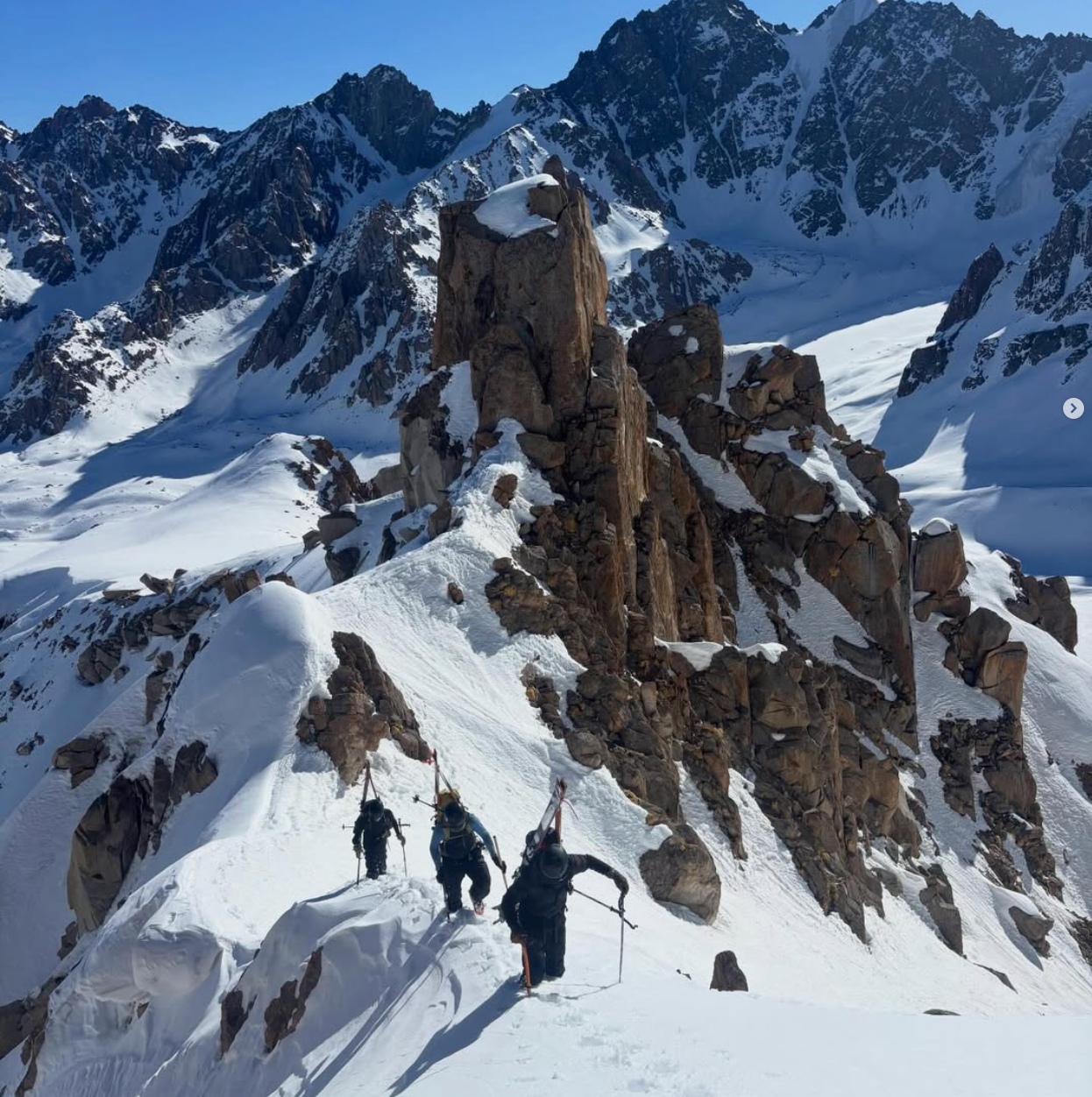
After loading heavy packs with skis, glacier gear, ropes, crampons and food, we began the long skin into the valley. Skinning is the uphill method in ski touring where textured skins attached to skis provide traction on snow.
Despite being surrounded by snow and ice, the heat was intense. The sun reflected aggressively off the glaciers and valley walls, turning the approach into a slow grind under relentless UV exposure. Hours later we finally reached a rough mountain hut cobbled together from bits of timber and corrugated iron, perched beneath our objective for the following morning, a rather large objective topping out at 4147m.
Inside the hut, the mood was simple and relaxed. Gear dried around the fire and everyone reorganised packs for the early start ahead.

Outside, the summit ridge glowed in the evening light before disappearing into darkness.
The alarm sounded at 3am.
An alpine start was essential to take advantage of the overnight freeze before the mountain heated under the sun again. Under clear skies, we climbed steadily upward through frozen snow, eventually moving onto steeper terrain involving exposed scrambling and deep postholing toward the summit ridge.
Postholing quickly became one of the more exhausting parts of the climb. Every few steps the crust would collapse beneath whoever was leading, plunging them knee or thigh-deep into the snow. The breaking trail became a constant rotation, one person suffering on the front until they were completely cooked before swapping out with the next.

At over 4000m the altitude began to make itself felt. Breathing slowed, transitions took longer, and the simplest movements became noticeably harder. Deep “Island Boy breathing” from the Japan and NZ crew became the soundtrack to the climb as everyone pushed upward through the thin air.

Eventually we topped out at 4147m where we found a small summit box containing a Kazakhstan flag, a handwritten logbook, and an old tally counter used to record successful ascents.

Carefully navigating around crevasses and large seracs, we linked onto a long protected face that delivered incredible snow from top to bottom. The upper mountain held cold recrystallised powder while the lower slopes softened into smooth spring corn as the aspect changed lower in the valley. Huge glaciated terrain stretched beneath us as we carved turns all the way back toward the hut.
It was the kind of skiing that makes every difficult step beforehand worth it.

While the mountains and skiing were unforgettable, one of the biggest challenges throughout the trip was actually the environment itself. The combination of altitude, dry air, reflected UV radiation, freezing nights and constant wind exposure is brutal on the body. Within days, lips crack, skin dries out, and faces get hammered by sun and windburn.
"Every single item carried uphill has to justify its weight."
In environments like this, skincare quickly stops being cosmetic and becomes essential mountain equipment.
The challenge, however, is that ski mountaineering is all about efficiency. Every single item carried uphill has to justify its weight. Packs are already filled with avalanche gear, glacier rescue equipment, technical layers, food, and emergency supplies. Anything extra needs to be lightweight, durable, and genuinely useful enough to earn a place in the kit.
That became one of the biggest reasons the products from Goodbye stood out so much on this trip.

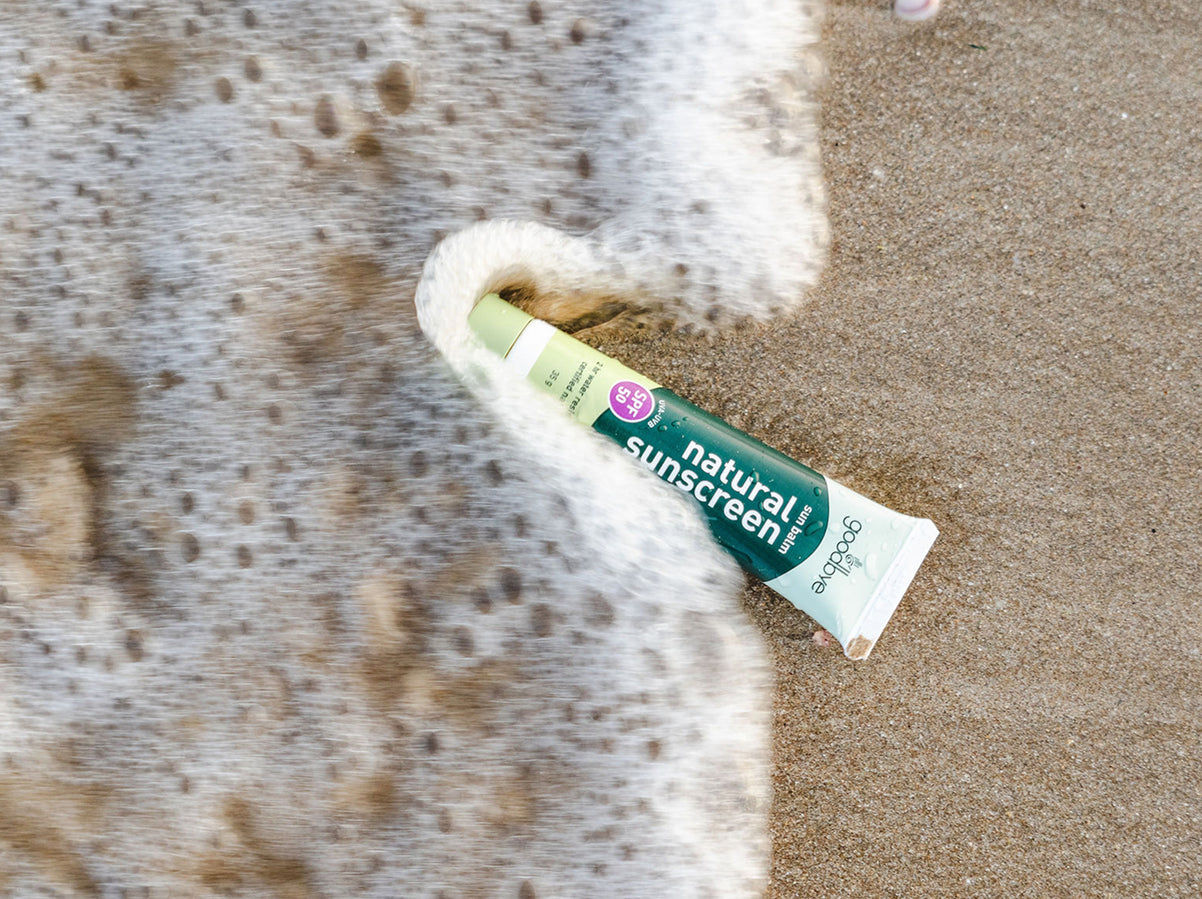
Sunscreen Refill Expedition Style- the small tin is carried on the day.
The sunscreen handled the relentless alpine UV exposure day after day, even during long hours skinning directly beneath reflective glacier walls. Conditions in Kazakhstan were deceptively harsh, cold temperatures masked just how intense the sun really was, especially at altitude where UV exposure becomes significantly stronger.
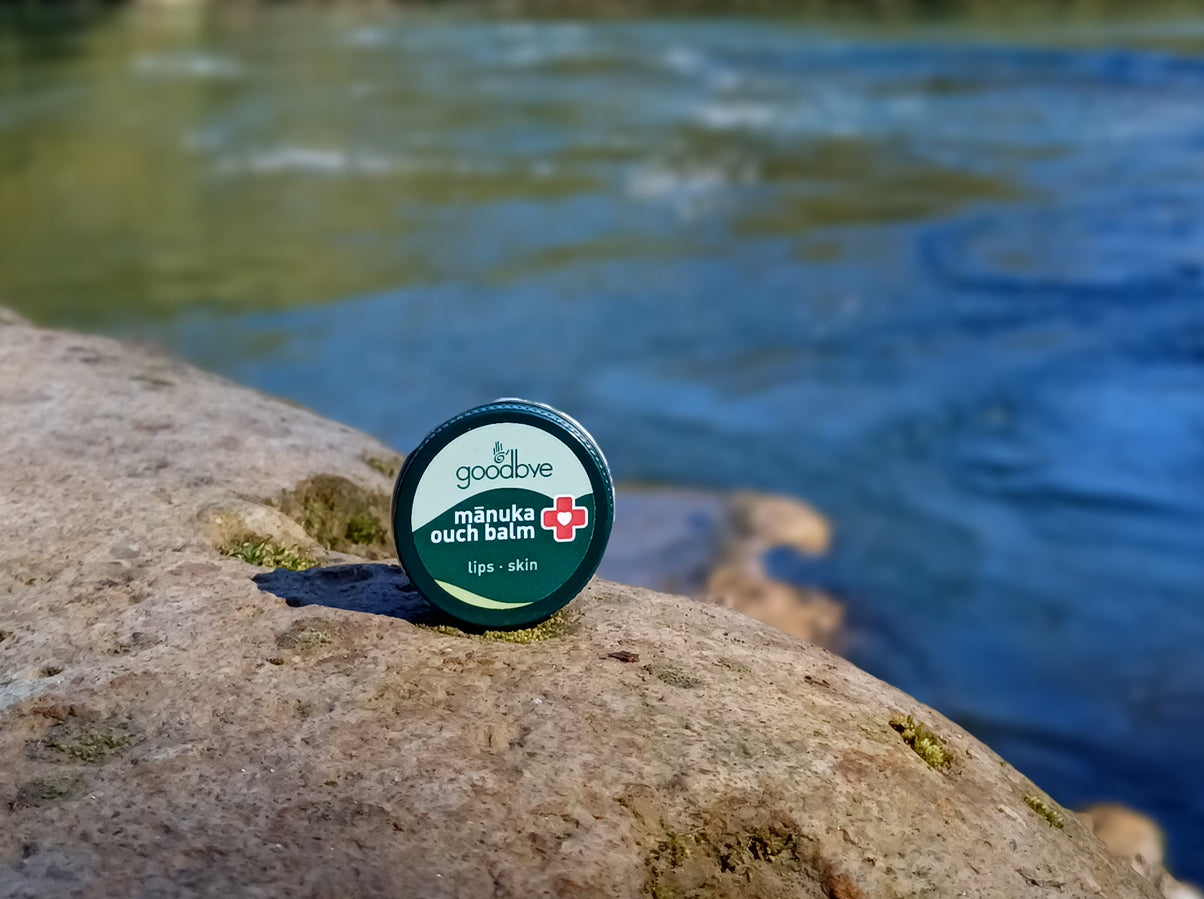
At the same time, the Goodbye mānuka balm became an everyday essential. Dry mountain air, freezing wind, and long days outside quickly destroy exposed skin, particularly around the lips and nose. Having something compact, lightweight, and genuinely effective made a massive difference during the expedition.

What stood out most was the simplicity of the products. In the mountains, complicated systems and bulky extras usually get left behind. The gear that survives repeated trips is the gear that works reliably while taking up minimal space and weight. Natural Goodbye’s products fitted organically into that category - practical, lightweight, and effective in harsh alpine environments.
August Extreme Sale- on until August 18th
~~~
Howie is part of the Outdoor Inspiration Team. He approached us with tales of how much he appreciates Goodbye products on his adventures. This is the only kind of ambassador we choose to work with. The ones who are absolutely devoted to the products in the way they support the outdoor life that they love.